The project aimed to advise farmers on using insecticides that are less harmful to the environment. For over a decade, they have been phasing out some harmful chemicals while promoting more sustainable alternatives.
My IAD capstone project is part of a multi-year project aimed at understanding and quantifying the benefits of orchard recycling and enhanced weathering amendments applications towards soil health and soil carbon levels.
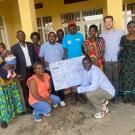
I received funding from the Global Fellowship for Agricultural Development and Jastro to travel to Rwanda and conduct research on a farmer field school (FFS) program focusing on conservation agriculture (CA).
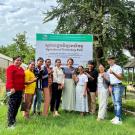
I chose to conduct my research on index insurance. My target location was the Battambang Province of Cambodia, as I had previous connections with staff at the Center of Excellence on Sustainable Agricultural Intensification and Nutrition (CE SAIN).
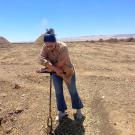
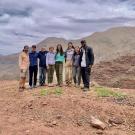
I had the opportunity to aid with dryland ephemeral stream monitoring in Morocco as a part of the DReAM program. This three-year research and educational program is designed to collect hydrologic data concerning water levels in several large Moroccan aquifers.
My Jastro grant was used to support me in my research to look at how soil organic carbon management effects wheat yield and nitrogen losses—specifically nitrous oxide.
With the help of the Henry A. Jastro Graduate Research Award, my research partner, Timothy Buensaliso, and I were able to conduct a feasibility study for cascara jelly production and marketing.
Working in collaboration with a local organization, The Howard Buffet Center for No till Agriculture (CNTA), my goal was to assess small holder farmer adoption potential of CA technology.
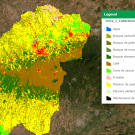
Together with the Raices Director, Paul Hicks (also an IAD alum) and two of my committee members, we decided that benchmarking irrigated areas in the Agua Caliente watershed where CRS’ efforts are focused, would be an ideal place to start.
In 2019, the Henry A. Jastro Graduate Research Award helped launch a research partnership with private sector partners in the Guatemalan coffee sector and in 2020, additional funding made it possible for that research to continue remotely, despite the challenges of COVID-19.