

From Davis to Kyoto: IAD at the 2026 International Horticultural Congress
IAD's Voice at the 2026 International Horticultural Congress
Quick Summary
- Every four years, horticultural scientists from around the world gather for the International Horticultural Congress. This year, the Executive Director and faculty connected to UC Davis's IAD program contributed to discussions in Kyoto spanning nutrition,
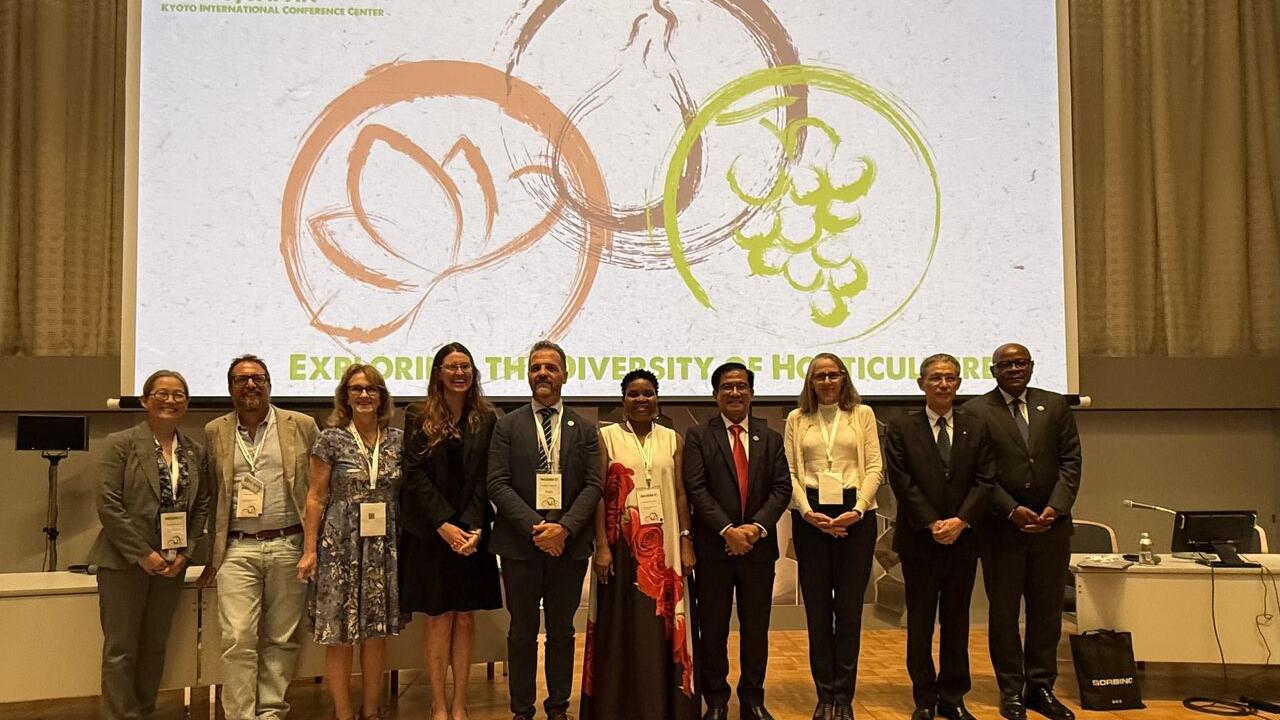
Every four years, horticultural scientists from around the world gather for the International Horticultural Congress. This August, the congress took place in Kyoto under the theme “Exploring the Diversity of Horticulture.” The Executive Director and faculty connected to UC Davis’s International Agricultural Development (IAD) program contributed to discussions spanning nutrition, climate resilience, agricultural investment, and postharvest loss.
Rethinking investment in fruits and vegetables
The congress opened on August 24 with a scientific event convened with the Food and Agriculture Organization of the United Nations (FAO) around its forthcoming global report on fruits and vegetables. Erin McGuire, director of IAD, presented findings from a global investment study that began at UC Davis.
The study found that fruits and vegetables account for roughly a quarter of global agricultural production value and are grown disproportionately by smallholder farmers. Despite their importance to diets and livelihoods, however, they receive only a small share of agricultural research and development investment. The event brought researchers and practitioners together to consider how investment decisions might better reflect the nutritional, economic, and environmental importance of these crops.
Scaling African indigenous fruits and vegetables
McGuire also presented “Aligning Food System Investments with Nutrition, Climate, and Equity Goals: Addressing Tradeoffs in Scaling African Indigenous Fruits and Vegetables” during the International Symposium on Agroecology and Systems Approaches for Sustainable and Resilient Horticultural Production.
The research was developed by a team whose institutions included the International Centre for Evaluation and Development, the University of Ghana, UC Berkeley, FAO, and CIRAD.
Many African indigenous fruits and vegetables are nutrient-rich, well adapted to local environments, and important sources of income for smallholder farmers. Women and young people often play significant roles in growing, processing, and selling these crops. The presentation explored both their potential and the tradeoffs that can emerge as demand grows. Drawing lessons from quinoa’s rapid global expansion between 2005 and 2015, the research emphasized the importance of ensuring that scaling strategies respond to the priorities and circumstances of the farmers involved.
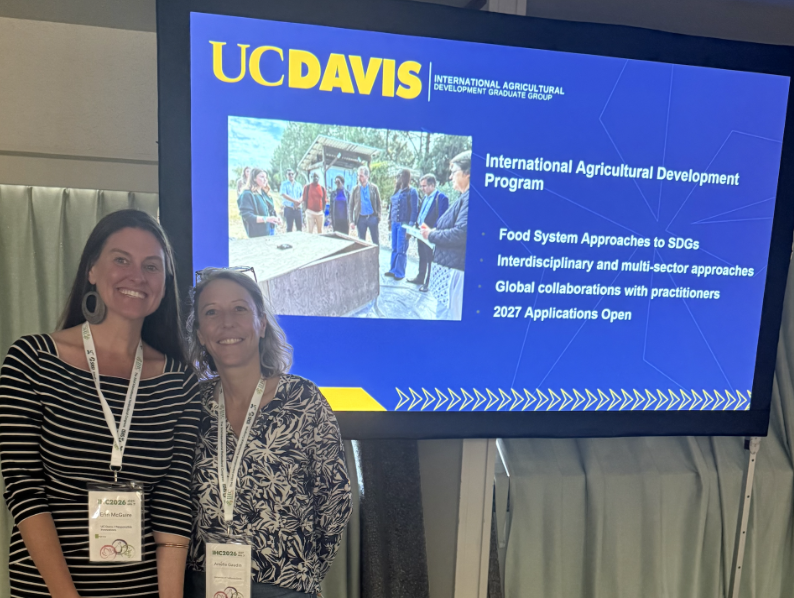
The broader UC Davis delegation
Other UC Davis faculty presented research across several areas of horticulture. IAD faculty member Amélie Gaudin discussed transitions to silvopastoral systems in California vineyards and orchards. Professor Carrie Waterman presented research on Moringa oleifera as a “smart crop” with potential benefits for both nutrition and sustainable production. In a session on postharvest biology, Professor Barbara Blanco-Ulate shared new research examining how fruit ripening increases susceptibility to fungal disease.
Together, the UC Davis presentations reflected the range of questions involved in building more nutritious and resilient food systems—from crop diversity and production practices to postharvest loss, research investment, and the social consequences of scaling agricultural innovations.